The German Perfect Tense's Wrong Turn: A Two-Ring Wheel for Haben and Sein
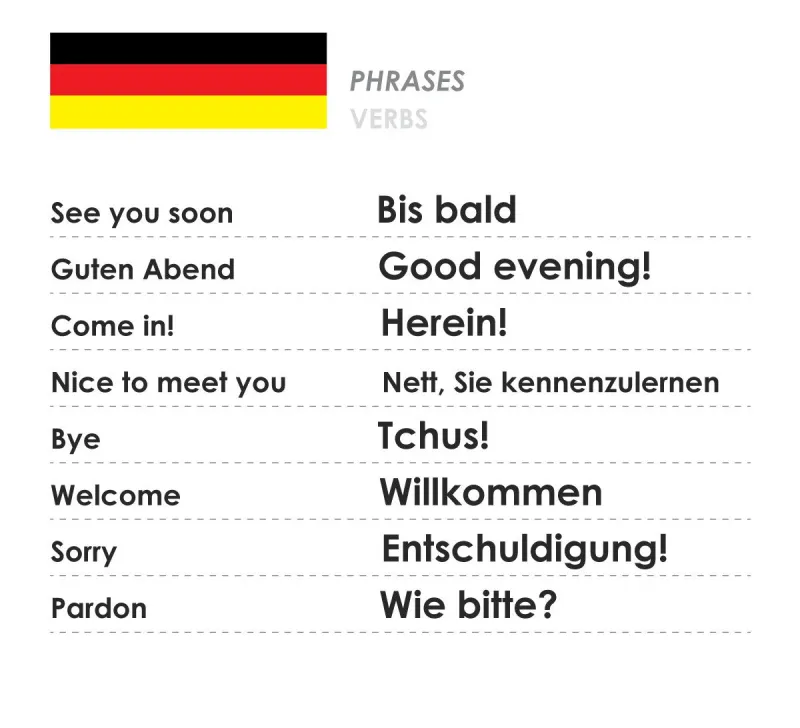
Photo: German grammar classroom verb wheel with two coloured rings for haben and sein, student whiteboard drill, via i.pinimg.com
The German perfect tense has a trap that is almost designed for UK learners. In English, the perfect tense uses have: I have gone, I have eaten, I have stayed. So when a British learner builds a German perfect sentence, haben feels like the natural default. Sometimes it is right. Often it is not.
The result is the familiar 'Ich habe gegangen' instead of 'Ich bin gegangen'. It is not a random slip. It is a direct transfer from English. The learner is not being careless; they are following the pattern their first language has taught them. That is why simply telling them to use sein more often rarely fixes the problem. The choice needs to become visible.
A two-ring verb wheel does exactly that. The outer ring holds the verbs that take sein: motion from one place to another, change of state, and a few special passengers such as bleiben. The inner ring holds the haben verbs: transitive verbs and the large majority of the rest. The learner spins to a verb, sees which ring it sits on, and gets a visual prompt before the English default takes over.
The trap in plain English
German uses two auxiliary verbs in the perfect tense: haben and sein. Most verbs take haben. A smaller group takes sein. That group is usually described as intransitive verbs showing movement from A to B, or a change of state, plus a few exceptions such as bleiben, sein and werden.
The word intransitive matters. If a verb takes a direct object, it normally takes haben. Essen is a good example: Ich habe Pizza gegessen. Lesen works the same way: Sie hat das Buch gelesen. There is a direct object doing the work.
Gehen is different. It shows movement and it has no direct object. So German says Ich bin gegangen. English says I have gone. The learner has to override the English pattern, not merely learn a new word.
Why a two-ring wheel beats another list
A list can tell you the rule. A wheel can show you the shape of the rule. That is the advantage of the two-ring design. The outer ring is not a random collection; it is a visual neighbourhood of movement and change. The inner ring is the busy centre of transitive verbs.
Colour helps. Use one colour for sein and another for haben. Add a small answer key on the back with sample sentences. In class, ask students to place verb cards on the correct ring before they write full sentences. The physical act of sorting gives the grammar a spatial memory hook.
The wheel is not a replacement for explanation. It is a place to look when the explanation has gone fuzzy. When a learner says 'Ich habe gegangen', the teacher can ask a better question: 'Which ring does gehen belong on, and why?' That moves the conversation from correction to reasoning.
Five verbs that show the split
gehen
Gehen means to go. It is intransitive movement, so it belongs on the outer ring with sein. Ich bin gestern ins Kino gegangen is correct. Ich habe gegangen is the classic error. Ask the learner: where is the direct object? There is not one. Does the verb show movement from one place to another? Yes. Outer ring.
fahren
Fahren is a double agent. When it means to travel or go by vehicle, it is intransitive movement: Wir sind nach Hamburg gefahren. When it means to drive a vehicle, it can be transitive: Er hat das Auto gefahren. The auxiliary depends on the use, not just the dictionary entry. Put fahren on the outer ring for travel, and add a note on the inner ring for the driving-a-thing pattern.
bleiben
Bleiben means to stay. It does not show movement from A to B and it does not show a change of state, yet it takes sein: Ich bin zu Hause geblieben. This is why bleiben belongs on the outer ring as a special passenger. Learners who expect a neat rule will otherwise default to haben. The wheel gives bleiben a memorable place.
essen
Essen means to eat. It is transitive, so it takes haben: Ich habe Pizza gegessen. Even when the object is left out in conversation, the verb's underlying pattern remains transitive. Ich habe schon gegessen is correct. Inner ring.
lesen
Lesen means to read. It is also transitive: Sie hat das Buch gelesen. The direct object is the book. Inner ring. If a learner tries to put lesen on the outer ring because reading feels like an activity, bring them back to the object test. Is there a thing being read? Then haben is the likely auxiliary.
Quick self-test
Fill the gap with haben or sein in the correct form. Try it without looking at the wheel first.
- Ich ___ nach Berlin gefahren.
- Wir ___ Pizza gegessen.
- Er ___ zu Hause geblieben.
- ___ du das Buch gelesen?
- Sie ___ ins Kino gegangen.
- Ihr ___ das Auto gefahren.
- Das Kind ___ eingeschlafen.
- Ich ___ schon gegessen.
Answers: 1 bin, 2 haben, 3 ist, 4 hast, 5 ist, 6 habt, 7 ist, 8 habe.
If you got all eight, try a speed round with five more verbs. If not, do not just memorise the answers. Check which ring each verb sits on and say why. The reasoning is the point.
A classroom-ready drill in seven minutes
Start with a printed two-ring wheel and a set of verb cards. Give students three minutes to sort six verbs onto the outer or inner ring. Then ask pairs to say one full sentence for each verb, using the correct auxiliary. The partner checks the ring, not the whole conjugation.
Next, run a quick whiteboard round. Call out a verb in English and ask students to hold up S for sein or H for haben. Keep the pace brisk. Finally, set an exit ticket: one sentence with a sein verb and one with a haben verb. Collect them and look for the pattern, not every small spelling slip.
The drill is deliberately narrow. It focuses on the auxiliary fork, because that is where the English default does the most damage. Once learners can sort gehen, fahren, bleiben, essen and lesen confidently, the wheel has done its job. The perfect tense stops being a fog of endings and becomes a choice between two visible rings.